
Vacuum infusion or hand lamination: what is the difference?
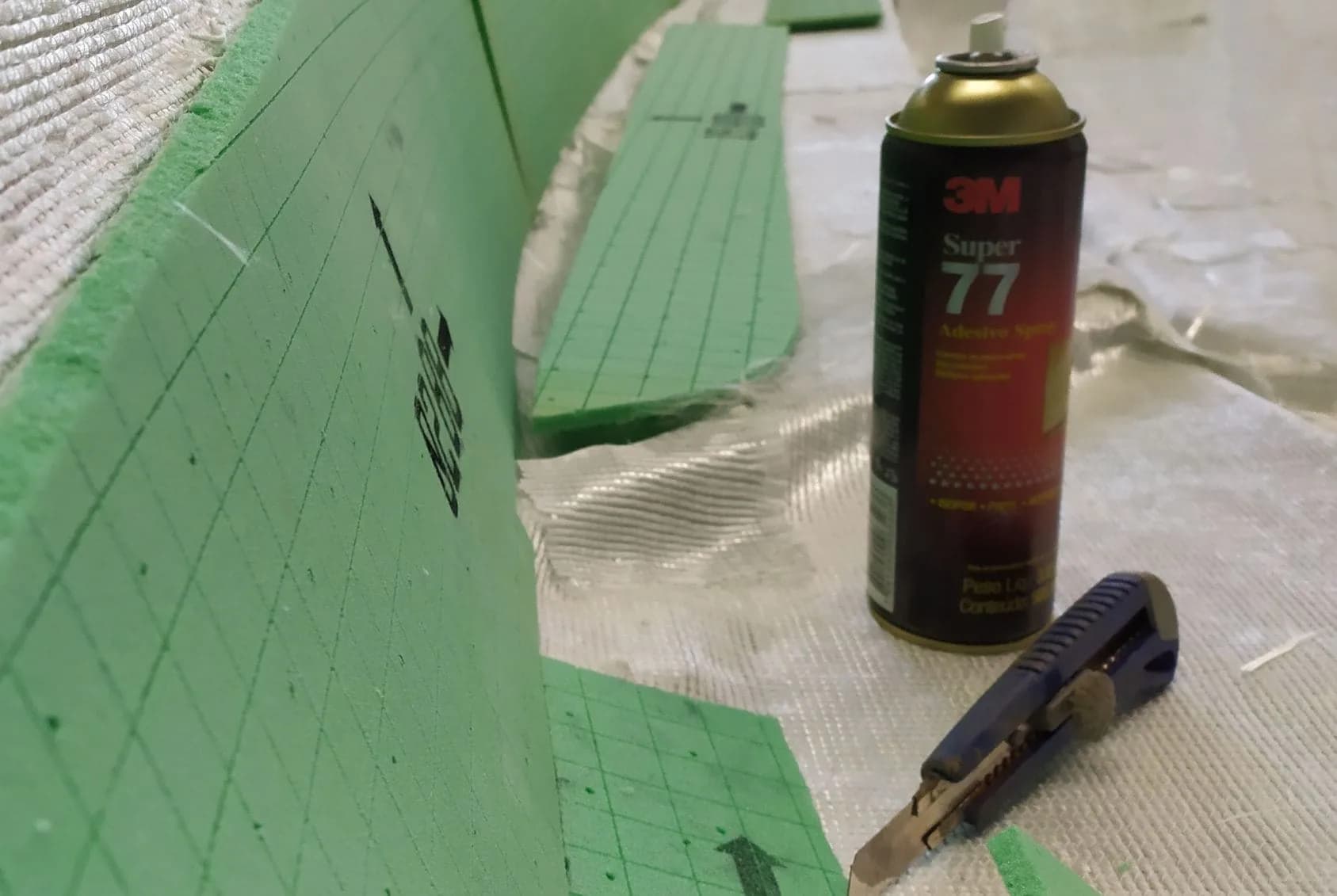
Infusion is one of the most advanced lamination processes in boatbuilding. Its defining feature is replacing hand lamination with vacuum infusion. The process can cut boat weight by up to 30% and increases structural strength, among several other advantages.
In practice it works like this: all the material, including fibres, fabrics and PVC foams (Divinycell and Renicell), is laid dry into the mould. The mould is then sealed and a vacuum pump draws the resin through the whole laminate at once.
Boats built by vacuum infusion use a sandwich system, which also improves thermal insulation. Boats produced this way are normally Wood Free, meaning no timber is used in the build. A few yards apply that principle even in hand lamination, using Divinycell and Renicell foams instead. The process delivers not only lower weight but added structural strength, which in some areas of the hull can be up to five times greater. And it is an environmentally sound process.
A vacuum pump, a catch pot, a vacuum gauge and raw materials such as polyester resin and biaxial glass composites are among the resources the process requires.
Boats built with vacuum infusion stand out for high performance, noticeably better handling and speed, along with a lower power requirement and therefore lower fuel consumption. There are many advantages to adopting this lamination process.